Do Celebrities Influence Bank Poster Engagement?
 RealEye
In today’s cluttered advertising landscape, standing out is essential - especially in industries like banking where building trust is key. But can celebrity faces really grab attention and drive action in financial advertising? A study by Dr. Ahmet Uyar dives into this question using eye tracking and facial coding, with RealEye playing a pivotal role in capturing consumer reactions.
The Study Setup
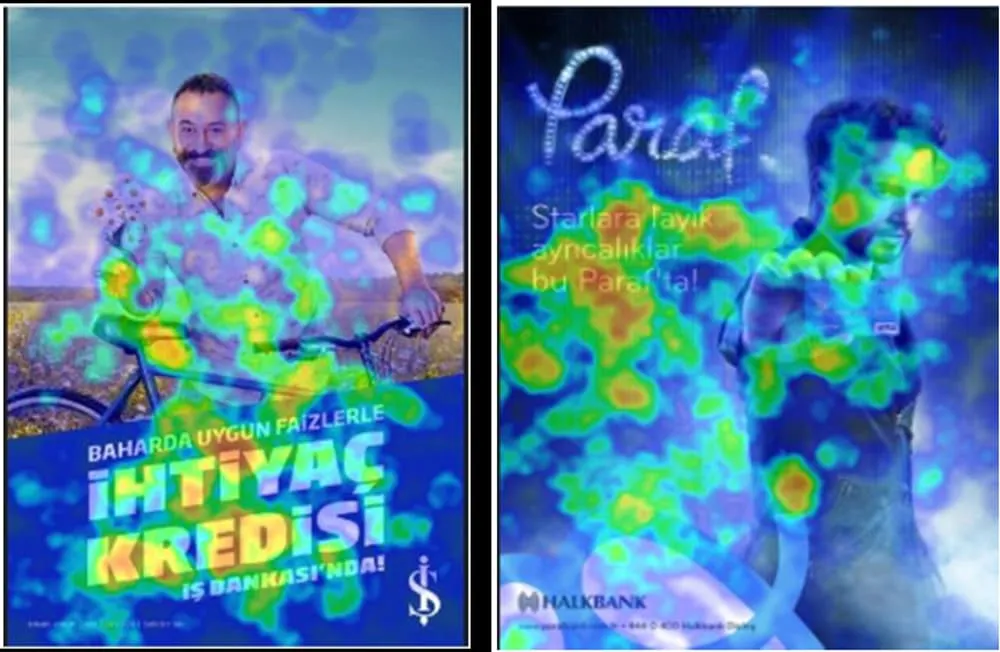
This research investigated how consumers respond to bank posters featuring well-known Turkish celebrities Cem Yılmaz and Murat Boz. Two posters - one from İş Bank with Cem Yılmaz and another from Halkbank with Murat Boz - were shown to 33 participants.
To get a complete picture of user engagement and emotional response, the study combined three methods:
- Eye Tracking using RealEye’s webcam-based platform.
- Facial Coding powered by RealEye to measure expressions like surprise and similing.
- Surveys, including Likert-scale questions and memory recall tests.
This multimodal approach allowed researchers to capture both the conscious and unconscious reactions to celebrity-based advertising.
Key Metrics
The RealEye platform delivered several core metrics:
- Fixation Duration: How long participants looked at specific poster elements.
- Revisit Rate: How often they returned to the same visual area.
- First Fixation Time: How quickly their eyes landed on a particular element.
What Did We Learn?
- Celebrities Boost Attention - But Not Always Trust
Participants agreed that celebrities made the ads more eye-catching. However, this didn’t necessarily lead to increased willingness to buy financial products. This echoes the finding that emotional appeal doesn’t always translate into consumer action.
- Text Beats Face
Despite the star power, most participants focused on the text - particularly the offer details - rather than the celebrity’s face or the bank’s logo. Heatmaps confirmed this trend, highlighting the importance of clear and strategic message placement.
- Mixed Recall Rates
Interestingly, while Cem Yılmaz’s face was more memorable, the message in Murat Boz’s poster was better recalled. This suggests a disconnect between who grabs attention and what actually sticks in the consumer’s mind.
- Emotional Response Matters
Facial coding revealed slightly more smiles and surprise reactions to Cem Yılmaz’s poster - likely due to his background in comedy. Emotional expressions, even subtle ones, can signal deeper engagement.
- Demographics Didn’t Change Much
Gender and education levels had no significant effect on attention or recall. This implies that celebrity impact might cut across demographic lines - but effectiveness still hinges on ad design and clarity.
What This Means for Marketers
This study reinforces that just having a celebrity isn’t enough. Here are a few takeaways for marketers:
- Design strategically: The message and layout matter more than the face alone.
- Test early: Tools like RealEye let you refine creative before big spends.
- Emotions count: Facial expressions can uncover hidden reactions that surveys miss.
- Measure recall: Memorable doesn’t always mean persuasive - use multiple metrics.

You can run a similar study!
Follow the steps below to start your own experiment with RealEye:
- Go to RealEye Dashboard and create or log in to your account.
- Purchase the License of your choice (https://www.realeye.io/pricing). If you need any custom adjustments, contact us at contact@realeye.io. We are happy to help!
- Activate your license by following the instructions in the RealEye License Activation Guide
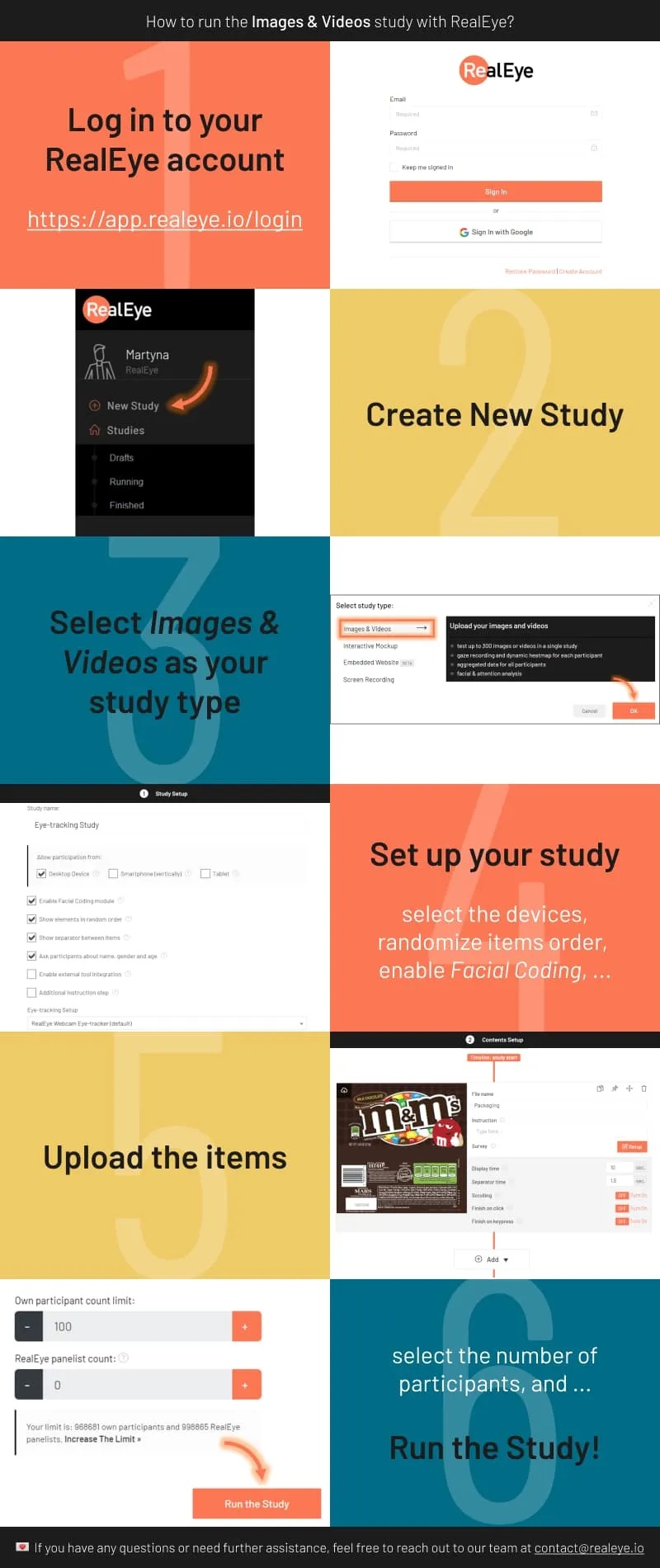
Ready to set up your own study? Visit RealEye Support page to learn more and keep us posted on your results! 🚀